




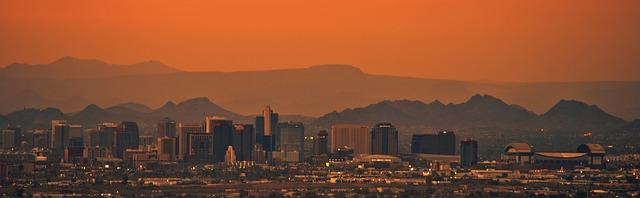
In the heart of the arid Southwest, Phoenix, Arizona, is undertaking a groundbreaking investigation into the intricate relationship between its urban forests and the city’s socioeconomic landscape. A new study, featured in Nature, employs multi-scale analysis to unravel how green spaces are distributed across this desert metropolis, shedding light on the environmental and social dynamics that shape residents’ quality of life. As cities worldwide grapple with the twin challenges of urbanization and climate change, Phoenix’s pioneering research offers vital insights into creating equitable and sustainable urban environments amid challenging ecological conditions.
Urban Forests in Phoenix Reveal Unequal Canopy Coverage Across Neighborhoods
Recent studies highlight stark disparities in tree canopy coverage across Phoenix, revealing that urban forests are not equitably distributed. Affluent neighborhoods tend to benefit from denser vegetation, leading to cooler microclimates and improved air quality, while low-income areas face sparse greenery, exacerbating urban heat island effects. This disparity poses significant public health and environmental justice concerns, emphasizing the critical role of urban forestry in shaping community well-being.
The analysis further outlines key socioeconomic factors influencing canopy distribution, including:
- Median household income: Higher incomes correlate with increased tree density and diversity.
- Historical zoning policies: Past urban planning decisions have created enduring green space inequalities.
- Community engagement: Neighborhoods with active local stewardship tend to maintain healthier and more expansive tree canopies.
| Neighborhood Type | Average Canopy Coverage (%) | Median Income (USD) |
|---|---|---|
| High-Income | 32 | 85,000 |
| Mid-Income | 18 | 50,000 |
| Low-Income | 9 | 28,000 |
Linking Tree Distribution to Socioeconomic Status Uncovers Environmental Inequities
Urban tree distribution in Phoenix reveals a stark divide aligning closely with socioeconomic status, exposing deep-rooted environmental inequities. Affluent neighborhoods enjoy significantly higher canopy coverage, offering residents cooler microclimates, improved air quality, and enhanced aesthetic value. Conversely, lower-income areas suffer from sparse tree populations, aggravating heat stress and diminishing residents’ overall well-being. This disparity underscores how environmental benefits are unevenly allocated, often mirroring systemic inequality in urban planning and resource allocation.
Key findings emphasize:
- Higher-income areas have up to 35% more tree canopy cover compared to economically disadvantaged neighborhoods.
- The disparity contributes to urban heat islands, with temperature differences reaching up to 7°F between neighborhoods.
- Communities with limited tree presence face increased risks of heat-related illnesses and reduced outdoor livability.
| Neighborhood Type | Average Tree Canopy (%) | Median Household Income ($) | Average Summer Temp. (°F) |
|---|---|---|---|
| High Income | 35% | 85,000 | 95 |
| Middle Income | 20% | 50,000 | 101 |
| Low Income | 10% | 30,000 | 102 |
This analysis calls for targeted urban forestry initiatives that prioritize tree planting in under-resourced neighborhoods. Addressing these inequities not only promotes environmental justice but also advances community health and resilience in the face of rising desert temperatures.
Satellite Data and Ground Surveys Unveil Multi-Scale Patterns of Urban Green Spaces
Integrating satellite imagery with comprehensive ground surveys has illuminated the spatial distribution and quality of urban green spaces across Phoenix. High-resolution remote sensing data enabled researchers to map vegetation density and health at varying scales, while on-site assessments provided crucial context on species diversity and human interaction within these green patches. This dual approach revealed complex patterns of urban forestry that are often masked when analyzed from a single perspective, highlighting the importance of multi-scalar evaluation in urban ecosystem studies.
Findings point to a strong correlation between green space availability and neighborhood socioeconomic status, with wealthier districts exhibiting more extensive and lush vegetation cover. The study outlined key disparities through this simplified table:
| Neighborhood Category | Average Tree Canopy (%) | Median Income ($) | Park Accessibility (mins) |
|---|---|---|---|
| High-income | 38 | 85,000 | 5 |
| Middle-income | 27 | 50,000 | 10 |
| Low-income | 15 | 28,000 | 18 |
- Enhanced vegetation mapping is key to equitable urban planning.
- Data-driven insights can guide resource allocation for environmental justice.
- Community engagement in green space design boosts accessibility and use.
Policy Recommendations Aim to Enhance Tree Equity and Climate Resilience in Desert Cities
To foster equitable access to urban greenery in Phoenix, policymakers are urged to prioritize investments that focus on underserved neighborhoods disproportionately impacted by heat stress and limited canopy cover. Strategies include deploying targeted tree planting initiatives that consider both ecological suitability and community needs. Emphasizing collaboration with local residents and stakeholders ensures that interventions align with cultural values and promote sustained stewardship. Furthermore, integrating tree equity goals into city planning and public health frameworks can amplify benefits, addressing environmental justice while enhancing urban resilience against climate extremes.
Key recommendations for amplifying tree equity and climate resilience:
- Data-driven site selection: Utilize high-resolution socio-environmental indicators to identify priority zones for greening efforts.
- Adaptive species choice: Select drought-tolerant native species to maximize survival and ecological balance.
- Community-centered planning: Engage neighborhoods in decision-making to reflect local preferences and encourage long-term care.
- Multi-agency coordination: Foster partnerships across municipal departments for integrated and efficient resource allocation.
| Recommendation | Expected Impact | Implementation Timeline |
|---|---|---|
| Targeted tree planting in low-canopy zones | Reduced urban heat island effect | 1-3 years |
| Community engagement programs | Improved maintenance and social inclusion | Ongoing |
| Development of drought-tolerant species catalogs | Enhanced survival rates & biodiversity | 6-12 months |
| Policy integration with public health agencies | Holistic climate adaptation | 2-4 years |
Concluding Remarks
In unraveling the complex interplay between urban forests and socioeconomic factors in Phoenix, this study underscores the vital role of green spaces in shaping the social and environmental fabric of desert cities. As climate challenges mount and urban populations grow, these insights highlight the importance of equitable urban forestry initiatives that not only enhance ecological resilience but also promote social equity. The multi-scale approach offers a valuable framework for policymakers and planners aiming to foster sustainable, inclusive urban landscapes in arid environments and beyond.